Building the future of agent engineering.
From agent design to production — patterns, tools, and systems.
Highlights
Hand-picked guides worth starting with.

ClaudeClaw
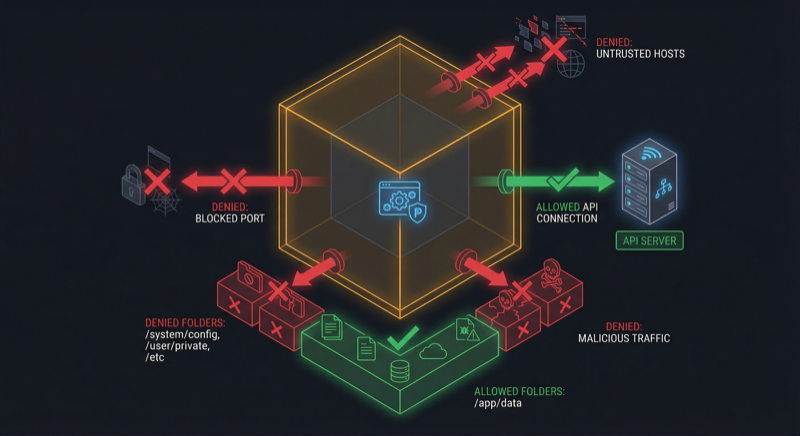
Use Claude to orchestrate agents like OpenClaw. Secured, fast, and extensible.
Personal Agentic OS: who will own the personal knowledge layer?
Frontier models are converging into commodities; your accumulated context is the one input nobody else has. The personal knowledge stack now exists — format, capture, sync, protocol — except for the one layer nobody has an incentive to standardize: governance. It's the last moat left, and whoever owns it owns the model of you.
Read →From Conductor to Orchestrator: A Practical Guide to Multi-Agent Coding in 2026
The complete landscape of multi-agent coding orchestration — from Claude Code Agent Teams to Oh My OpenAgent, the Ralph Loop pattern, and how to choose the right tier for your workflow
Read →Top 7 Open-Source AI Low/No-Code Tools in 2026: A Comprehensive Analysis of Leading Platforms
An updated analysis of 7 open-source platforms redefining AI implementation in 2026: Activepieces, Dify, Langflow, n8n, Flowise, Botpress, and CrewAI — covering agentic workflows, MCP adoption, and human-in-the-loop capabilities
Read →How to use Claude Code
The complete guide to Claude Code in 2026 — features, hooks, skills, MCP servers, subagents, permission modes, and advanced workflows for maximum productivity
Read →Recent Posts
A List Is a Snapshot: Curating Awesome ADE While GitHub's Star Signal Went Dark
Building a curated list of Agentic Development Environments meant verifying a hundred repositories by hand — and discovering that the usual way of spotting what is rising on GitHub has quietly stopped working
Read →A Machine Per Agent
macOS virtualization stopped being about running Windows. Apple container, OrbStack, Lima, Tart, UTM, QEMU, and why the VM became an allocatable unit again.
Read →After the Browser
the agent harness is the new browser, MCP is the new HTTP, and the hard problems have moved from the loop to the tool layer, context management, and federated capability.
Read →The claw-code Story: What's the Harness?
The architecture behind the most important leak of AI history, and probably the inflexion point for agent orchestration
Read →From Conductor to Orchestrator: A Practical Guide to Multi-Agent Coding in 2026
The complete landscape of multi-agent coding orchestration — from Claude Code Agent Teams to Oh My OpenAgent, the Ralph Loop pattern, and how to choose the right tier for your workflow
Read →Pi AI SDK vs Anthropic Claude Agent SDK
"The analogy from the ecosystem that resonated most: Claude Code is "Rails" — opinionated, structured, with best practices baked in. Pi is "Arch Linux" — giving you the smallest kernel and the greatest freedom. "
Read →Browse by topic
Frequently Asked
How to use Claude Code effectively?
Claude Code is Anthropic's CLI tool for AI-assisted development. Learn best practices including sub-agents, skills, hooks, and full-stack configuration to supercharge your workflow.
Read more →What are the best open-source workflow orchestration tools in 2026?
Top tools include n8n, Dagster, Prefect, Kestra, and Argo Workflows. Each excels in different areas from low-code automation to data pipeline orchestration.
Read more →What is the modern Python data stack?
The modern Python data stack in 2026 combines tools like Dagster, dbt, Great Expectations, and DuckDB for orchestration, transformation, quality, and analytics.
Read more →What are the best backend-as-a-service platforms?
Leading open-source BaaS options include Appwrite, Supabase, Payload CMS, Directus, and Convex — offering auth, databases, storage, and APIs out of the box.
Read more →How to get started with web scraping in Python?
Python offers powerful scraping tools: Scrapy for large-scale crawling, BeautifulSoup with Requests for quick scripts, and Parsel for lightweight parsing with CSS and XPath selectors.
Read more →Build things, share what you learn, and don't wait until it's perfect.